
This page introduces the creative studio behind Rune Wilder’s music and visual world, while also offering a brief tribute to the real Welsh tales that inspired its name — The Four Branches of the Mabinogi.
Rune Wilder’s music and visual world is created inside Mabinogi, a small creative studio named in tribute to the old Welsh tales that helped shape her mythology.
There are two versions of the studio: one in Utah and one in California. Both are built for songwriting, vocals, sound, video, and image-making — with Fender electrics, Gibson acoustics, Moog, Korg, and Yamaha keyboards, Apogee converters, select outboard gear, trusted studio monitors, and a deep collection of plugins and synths, from industry standards to strange esoteric sounds.
The name comes from The Four Branches of the Mabinogi, a cycle of medieval Welsh stories filled with kings, queens, magic, betrayal, transformation, strange bargains, enchanted animals, otherworldly visitors, and the thin veil between the human world and the unseen one.
The Four Branches of the Mabinogi are among the great treasures of Welsh storytelling. They survive from medieval manuscripts, but the stories themselves feel much older, carrying traces of myth, oral tradition, heroic legend, and the mysterious world of Annwn — the Welsh Otherworld.
First Branch: Pwyll, Prince of Dyfed
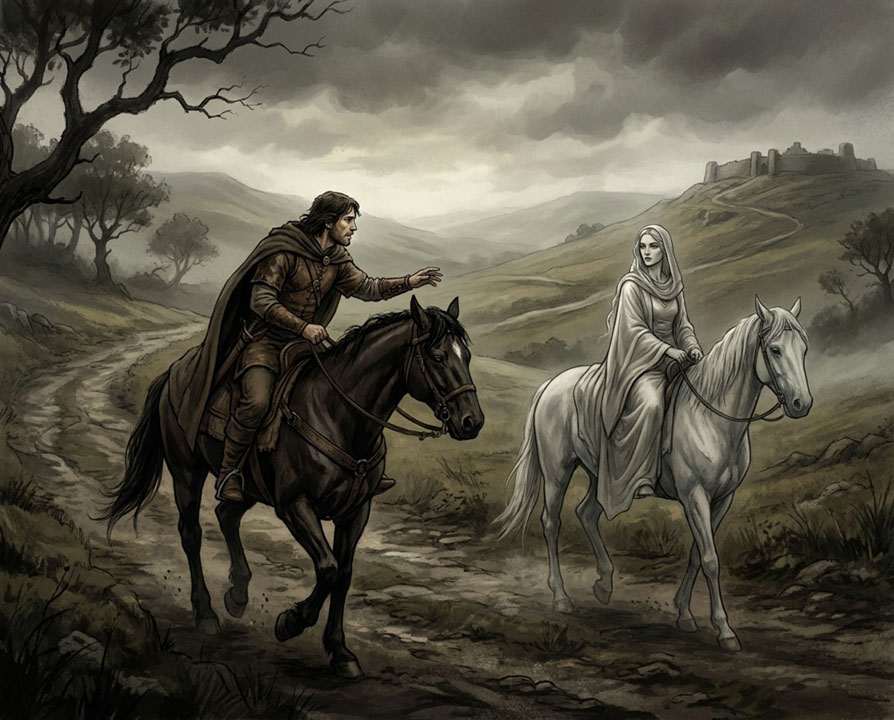
The first branch begins with Pwyll, prince of Dyfed, who accidentally offends Arawn, ruler of Annwn. To make things right, Pwyll agrees to trade places with him for a year and a day.
This story introduces one of the great themes of the Mabinogi: the crossing between worlds. Human life and the Otherworld are close together, and a single mistake can open the door between them.
Pwyll later meets Rhiannon, one of the most powerful and mysterious women in Welsh myth. Their story includes love, false accusation, endurance, and restoration.
Second Branch: Branwen, Daughter of Llŷr
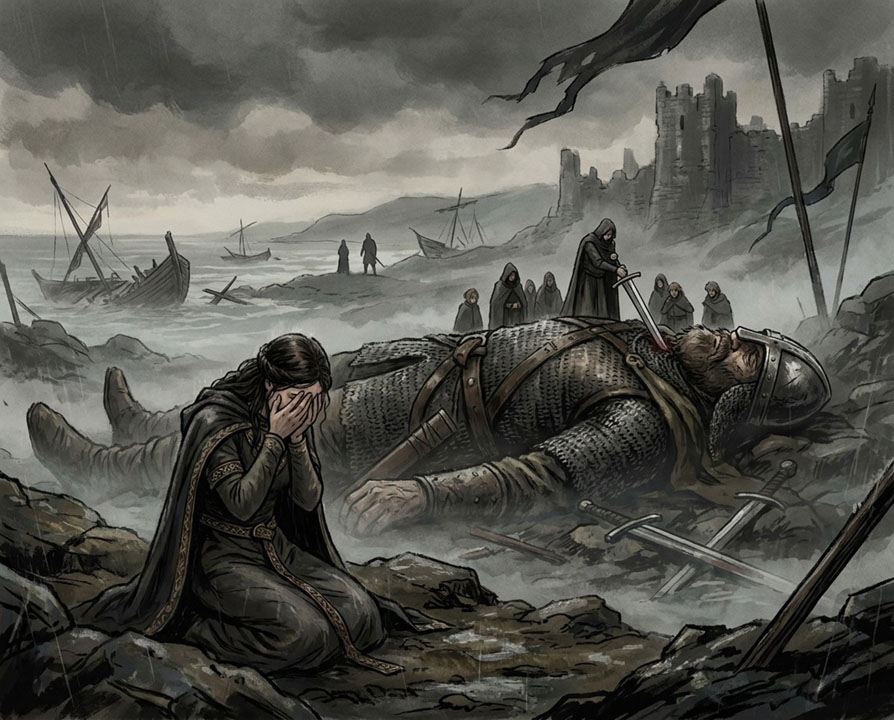
The second branch tells the tragic story of Branwen, a Welsh princess married to the king of Ireland. What begins as a political marriage becomes a story of cruelty, betrayal, war, and grief.
At the center of the tale is Brân the Blessed, Branwen’s giant brother, who leads Wales into a devastating conflict after learning how badly his sister has been treated.
This is one of the saddest branches. It is about family loyalty, the cost of revenge, and how one act of mistreatment can destroy kingdoms.
Third Branch: Manawydan, Son of Llŷr
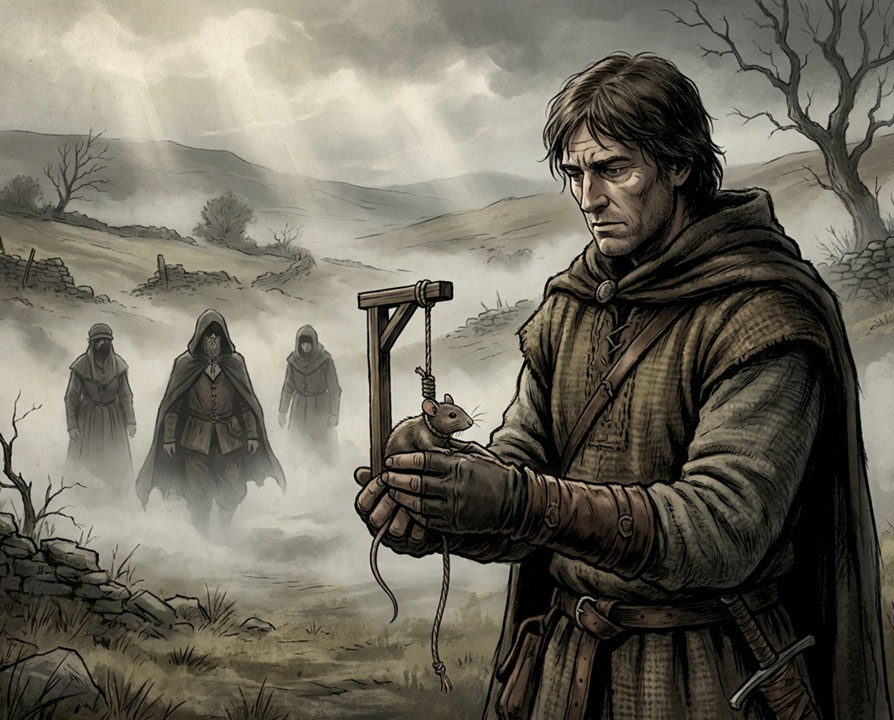
The third branch follows Manawydan, a survivor of the disaster in the previous tale. Instead of focusing on war, this branch becomes quieter, stranger, and more psychological.
A mist falls over the land. People vanish. The world becomes empty. Manawydan and his companions must survive through patience, craft, intelligence, and restraint.
This branch feels almost modern. It is about loss, exile, waiting, and learning how to endure when the world you knew has disappeared.
Fourth Branch: Math, Son of Mathonwy
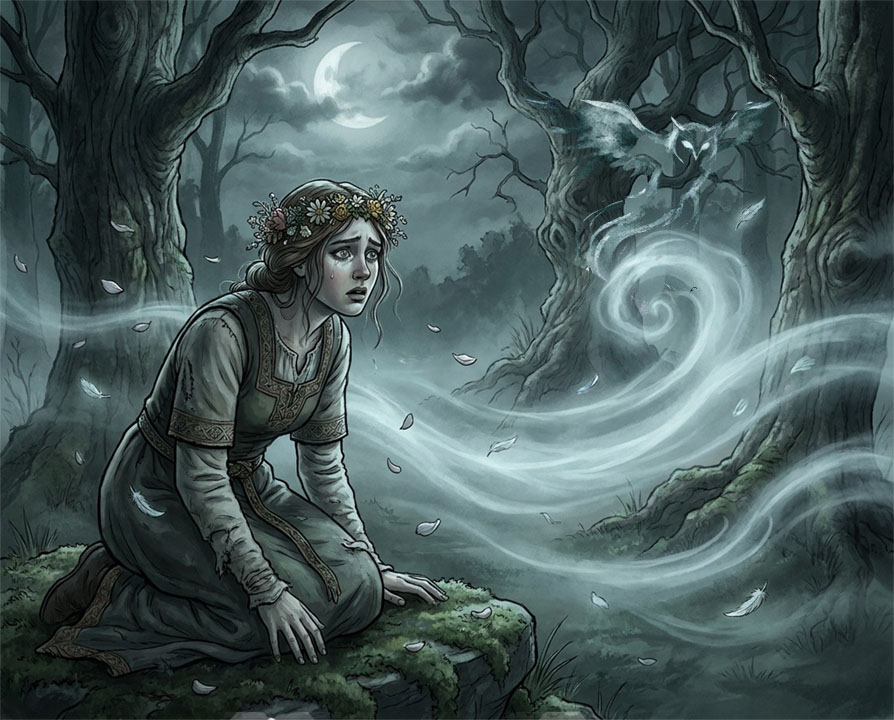
The fourth branch is one of the strangest and most magical. It includes Math, Gwydion, Arianrhod, Lleu Llaw Gyffes, and Blodeuwedd — a woman created from flowers.
This branch is filled with transformation, deception, curses, identity, and power. Blodeuwedd’s story especially has echoed through later Welsh-inspired art and literature: a woman made to serve someone else’s fate, who then tries to claim her own.
It is beautiful, unsettling, and morally complicated — exactly the kind of myth that keeps changing shape every time it is retold.
For anyone drawn to Rune Wilder’s world, these old Welsh tales open a much larger doorway into Welsh myth, medieval storytelling, folklore, language, landscape, and history. We invite you to explore them further through books, museums, universities, libraries, Welsh cultural sites, and your own searches. The deeper you go, the more you may discover why these stories still feel alive — full of music, grief, beauty, magic, transformation, and the feeling that another world has always been close by.